 NBA
NBA Boston Celtics
 Chicago Bulls
 Milwaukee Bucks
 Brooklyn Nets
 Miami Heat
 Los Angeles Lakers
 Golden State Warriors
 Phoenix Suns
 Denver Nuggets
 Dallas Mavericks
 LA Clippers
 Houston Rockets
 San Antonio Spurs
 Minnesota Timberwolves
 Oklahoma City Thunder
 Sacramento Kings
 New Orleans Pelicans
 Memphis Grizzlies
 Utah Jazz
 Portland Trail Blazers
 New York Knicks
 Philadelphia 76ers
 NFL
NFL New England Patriots
 Miami Dolphins
 Buffalo Bills
 Jacksonville Jaguars
 Indianapolis Colts
 Tennessee Titans
 Los Angeles Chargers
 Las Vegas Raiders
 Baltimore Ravens
 Dallas Cowboys
 New York Giants
 New Orleans Saints
 Tampa Bay Buccaneers
 Green Bay Packers
 New York Jets
 Cincinnati Bengals
 Pittsburgh Steelers
 Houston Texans
 Los Angeles Rams
 san francisco 49ers
 MLB
MLB New York Yankees
 Toronto Blue Jays
 Boston Red Sox
 Baltimore Orioles
 Chicago White Sox
 Detroit Tigers
 Cleveland Guardians
 Los Angeles Angels
 Houston Astros
 Cincinnati Reds
 Milwaukee Brewers
 St. Louis Cardinals
 Los Angeles Dodgers
 San Diego Padres
 Colorado Rockies
 San Francisco Giants
 Tampa Bay Rays
 Kansas City Royals
 Minnesota Twins
 Athletics
 Seattle Mariners
 Texas Rangers
 Atlanta Braves
 Miami Marlins
 Arizona Diamondbacks
 Pittsburgh Pirates
 Chicago Cubs
 Washington Nationals
 New York Mets
 Philadelphia Phillies

















How to Spot a Fake New Era Cap? (The Ultimate Legit Check Guide & Analysis)
As a hardcore streetwear enthusiast and an absolute cap-collecting fanatic, the number of times I’ve been scammed or almost scammed in the past few years is probably higher than the total number of hats some people own. If you love street culture or you are a die-hard baseball fan, your wardrobe is simply incomplete without a New Era cap. Undeniably, New Era has transcended being just a brand; it’s the soul accessory of street fashion. But with this immense popularity comes a massive problem: the market is flooded with fakes. Today, this blog post is going to solve your ultimate pain point: How to tell a fake New Era Cap?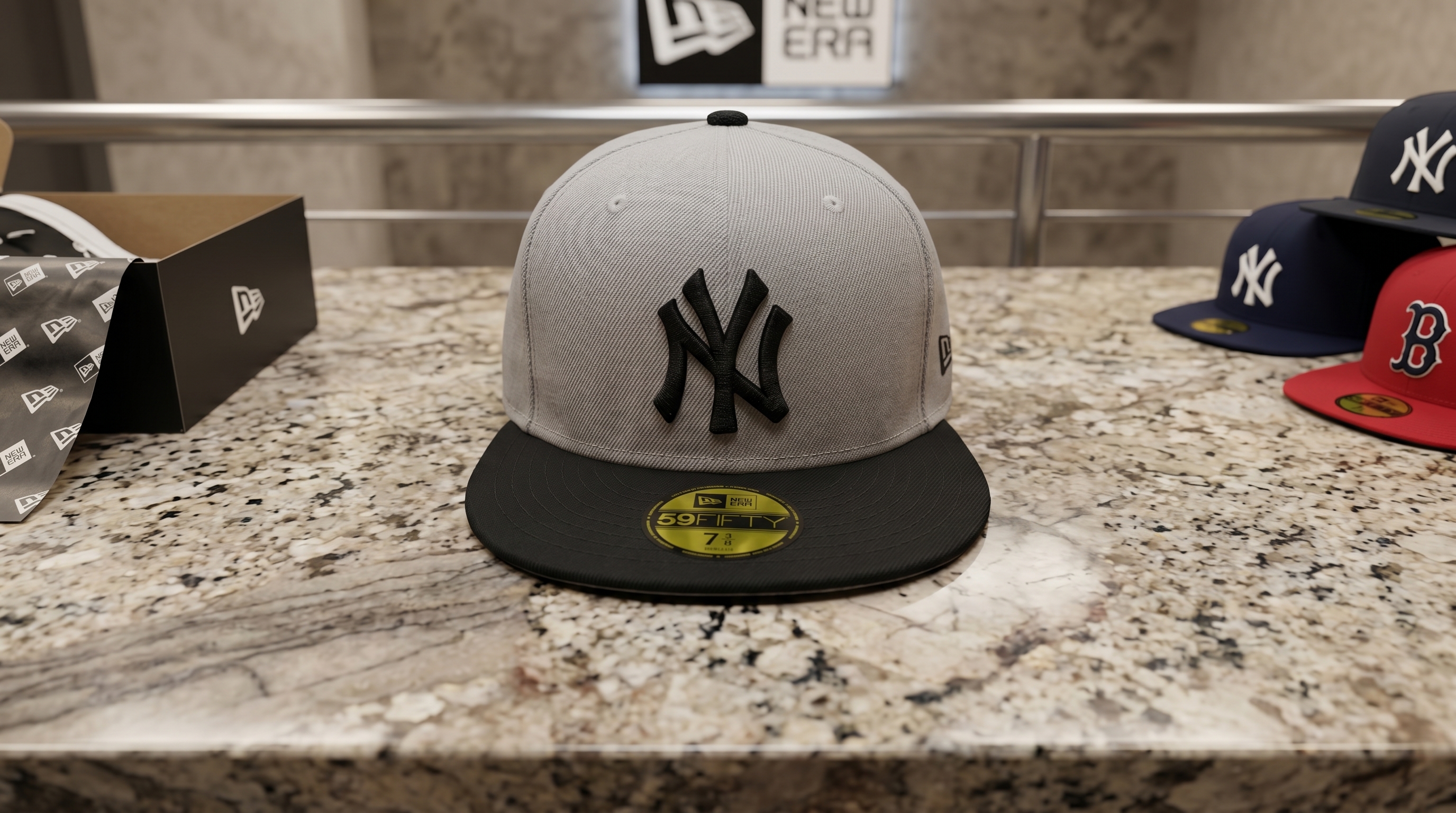
To stop you from wasting your hard-earned money, I’ve put together this absolutely essential guide. I will not only dive deep into how to tell if a new era hat is fake, but I’ll also use a new era yankees cap I recently hunted down as a real-world case study, teaching you exactly how to authenticate them, especially focusing on the most iconic new era 59fifty baseball caps.
1. The First Glance: The Soul Lies in the "Structure"
When rookies buy a hat, their first instinct is just "Oh, this looks cool." But veteran collectors look at the "skeleton." New Era, especially the legendary 59FIFTY series, is a true fitted cap—fully closed, non-adjustable, with a flat visor. The front panels (the Crown) of an authentic 59FIFTY are reinforced with a special fabric called "Buckram." When you place a genuine cap flat on a table, the front half stands up proudly and rigidly; it will absolutely not collapse or cave in. Counterfeiters, aiming to cut costs, usually use flimsy, cheap lining. If you press it lightly with your hand, or wear it a few times and sweat in it, the forehead of a fake cap will deflate like a punctured balloon. This is what we call "fake at first sight."
2. The Core Authenticator: The Side Flag Logo Embroidery (Image Analysis)
If you only have time to check one single detail to verify authenticity, lock your eyes directly onto the New Era Flag Logo on the left side of the cap. This is an absolute disaster zone where almost all fake manufacturers expose themselves.
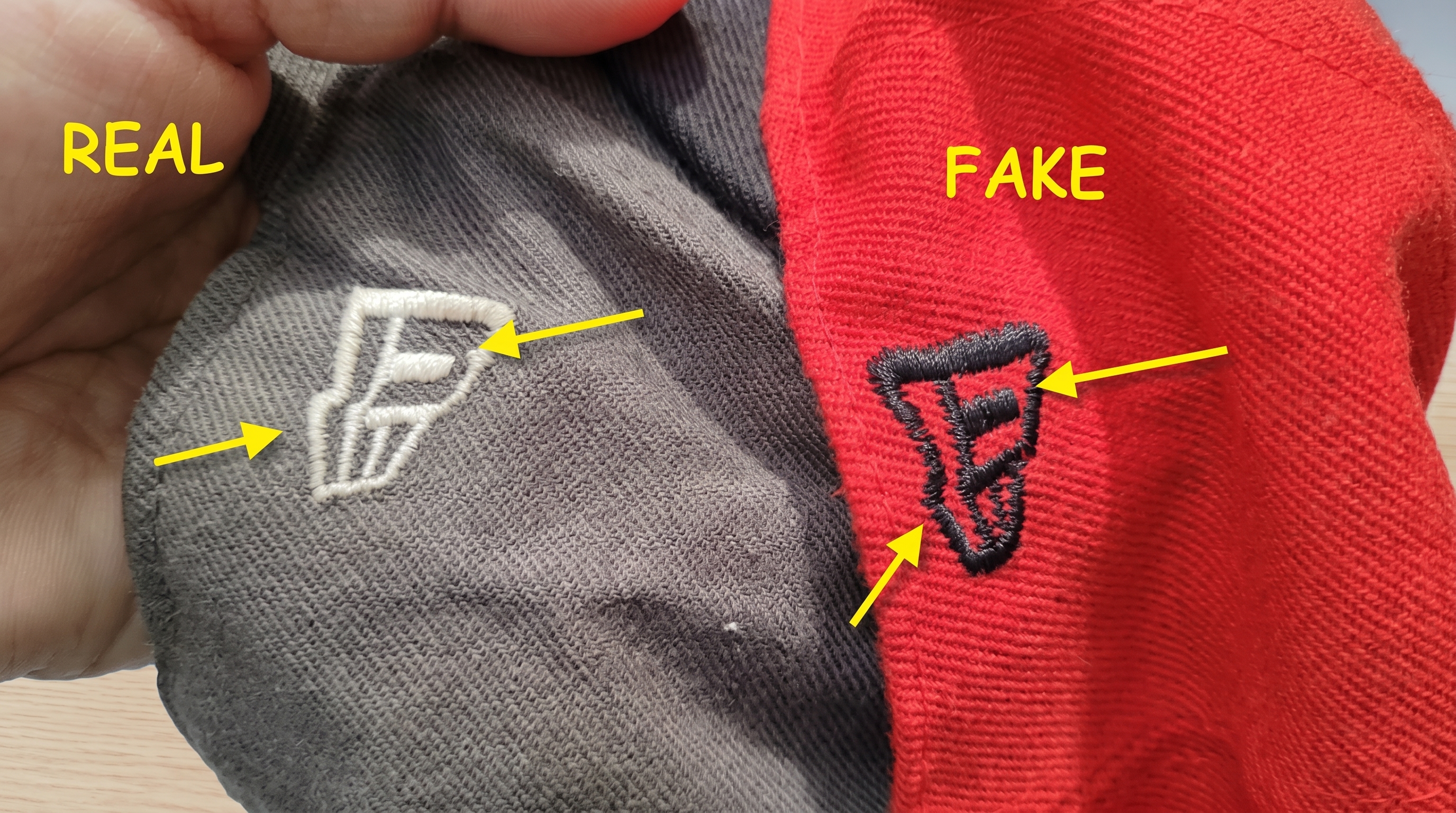
Looking at the comparison image provided above, we can clearly see just how terribly sloppy the fakes are:
-
The Authentic (REAL): The embroidery on a genuine cap is extremely tight, clean, and sharp. Look at that white logo; the boundaries of the lines forming the 'N' and 'E' illusion are razor-sharp. The negative space (the exposed fabric between the stitches) is even and precise. Authentic embroidery has a strong three-dimensional feel, a slight bump when you run your finger over it, and there are absolutely no messy, rogue threads connecting different parts of the logo.
-
The Counterfeit (FAKE): Now look at the fake one on the right (black embroidery on red fabric). The areas pointed out by the yellow arrows are a total train wreck. First, the edges of the embroidery are blurry and out of shape. Lines that are supposed to be disconnected are merged together into one messy blob due to poor machinery (like the junction of the middle bars). The entire logo looks bloated, almost like cheap ink bleeding on wet paper, completely losing the geometric sharpness of the original brand mark. If the side logo on the hat in your hand looks twisted, wonky, or has interconnected threads, don't even second-guess it—it’s 100% fake.
3. Inside the Cap: The Devil is in the Details
Another major battlefield for verifying new era 59fifty baseball caps lies hidden inside the hat.
-
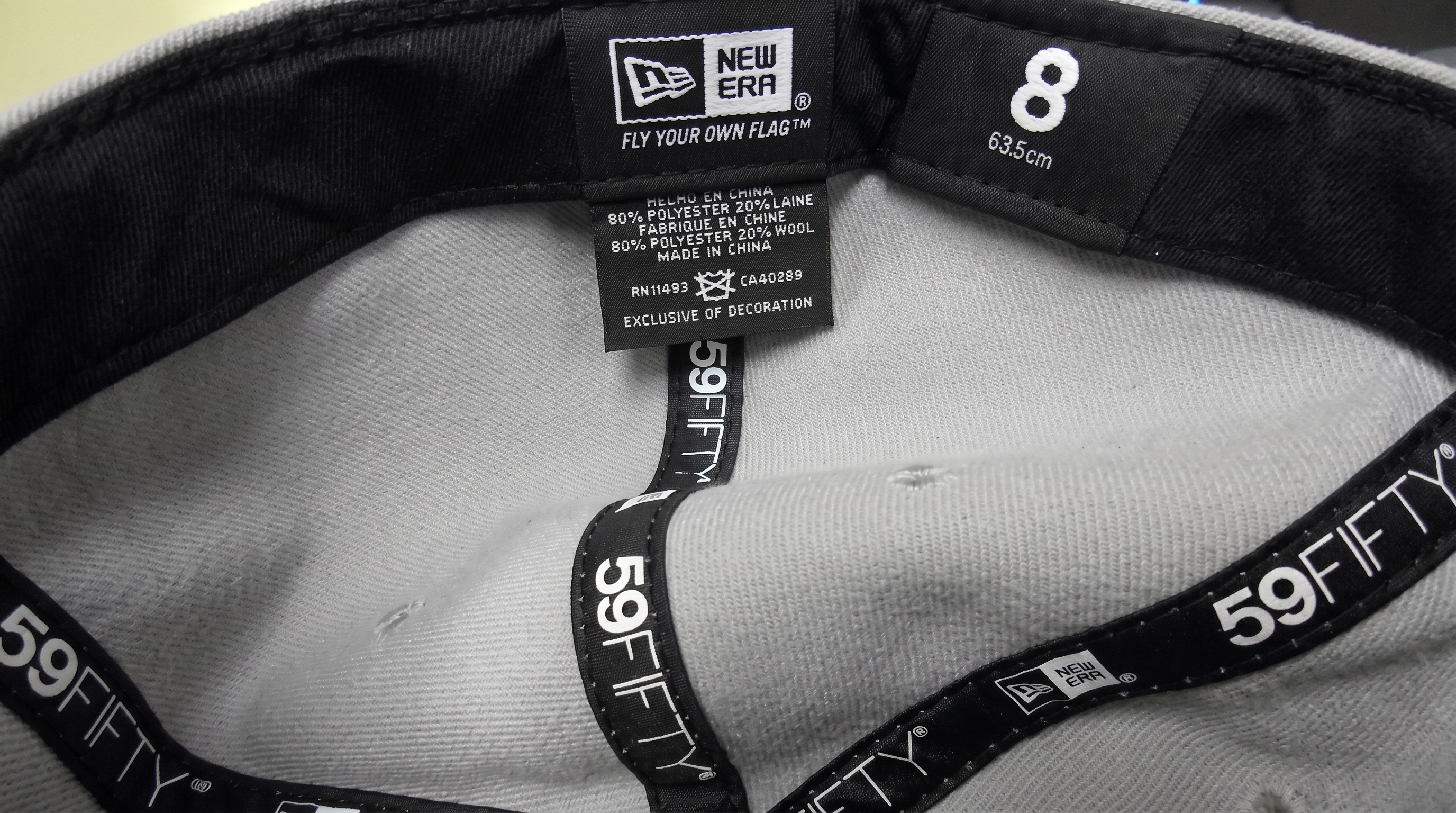
The Sweatband and Stitching: A genuine sweatband feels thick, plush, and offers excellent moisture-wicking breathability. Crucially, the stitching lines running across the sweatband are perfectly parallel and even. On fakes, the stitching is often crooked, wavy, or even has skipped stitches.
-
Custom Seam Taping: Look at the taping covering the interior seams. Authentic taping will clearly feature "NEW ERA" or "59FIFTY" typography and logos (depending on the year and style). This printing should be crisp and resistant to peeling. Fake printing is often blurry, or the font proportions are just weirdly off.
-
Tags & Labels: This is a science in itself. Genuine interiors usually have a cluster of tags: the brand tag, the league authorization tag (like MLB or NBA), and the sizing label. The edges of authentic tags are neatly stitched, and the fonts are highly legible. Especially on the sizing tag (e.g., 7 3/8 or 7 1/2), the authentic font has a specific, slightly rounded aesthetic, whereas fakes often use rigid, default computer fonts. If you are buying an MLB cap, inspect the MLB Batterman logo tag; the batter on a fake often looks deformed, resembling an alien rather than a baseball player.
4. The Iconic Sticker: More Than Just a Decal
We all know the culture—many collectors absolutely refuse to peel off the Visor Sticker. Fake manufacturers are well aware of this flex, so they put "effort" into replicating the sticker, but thankfully, they suck at it.
Take that red new era angels cap I was searching the globe for recently. I found a seller on a second-hand marketplace offering a tempting price. But when they sent me the actual photos, the gold 59FIFTY sticker on the brim instantly made me back out. An authentic sticker has a premium, metallic reflection; the gloss of the gold/silver foil changes naturally under light. The sizing numbers printed on it (like 7 1/4) are ultra-sharp. The sticker on that fake Angels cap had a gloss that looked exactly like cheap kitchen aluminum foil. The most ridiculous part? The sticker wasn't even centered on the visor; it was visibly slanted! Authentic New Era quality control involves both machine and human checking, ensuring the sticker placement is usually dead accurate. Furthermore, when you peel off an authentic sticker, it rarely leaves stubborn, sticky residue. Fakes use cheap glue, so once you peel it, you're left with a massive, hard-to-clean stain on your brim.
5. The Squatchee (Top Button) and Eyelets
Don't ignore the little round button at the very peak of the cap (officially called the Squatchee). The top button of a real cap is firmly secured from the inside with a metal pin. If you look up into the inside of the hat, you will see a smooth, clean metal base. If you find that the metal base is rusted, extremely rough, or worse—made of cheap plastic—it is undoubtedly a fake. Then there are the eyelets (ventilation holes). The embroidery finishing around each eyelet on a genuine panel is thick, rounded, and full. Fake eyelets often suffer from loose threads, or feature the embarrassing flaw where the circular holes aren't even perfectly round.
Conclusion: Reject Fakes, Respect the Culture
After diving into so many nerdy details about how to tell if a new era hat is fake, what I really want to emphasize is this: buying authentic isn't just about chasing quality; it's about respecting street culture and the spirit of sports. A fake might fool a random passerby for a split second, but it will never give you that genuine, from-the-inside-out confidence and comfort that an authentic piece provides.
Whether you are hunting for the classic Yankees 59FIFTY, or you are as obsessed as I am with tracking down a specific new era angels cap, please try to purchase through official channels, authorized retailers (like Lids), or highly reputable streetwear boutiques. If you must buy on the secondary market, keep your eyes wide open and apply the techniques you learned today—check the structure, check the inside tags, and analyze that sticker. I hope this ultimate guide on How to tell a fake New Era Cap? equips you with the sharp eyes needed to navigate this tricky market. Next time you buy a cap, always, always double-check that side flag logo!